
This is the first in a series of planned articles by local zoologist, Annie Lamb, looking at what our mammals are up through the year. Check back here for future articles…
Mammals in general are affected by the lengthening period of darkness in August and September. Not only does dusk come earlier, but the rate of change accelerates like mad as the equinox approaches. Mammals are able to respond to this in several very effective ways. They can grow thicker underfur. The guard-hairs of the coat may change, perhaps giving improved waterproofing. The animals seek out the abundant food of late summer and store energy as fat, as well as caching various foods for future use. They may begin making extra-cosy nests. Smaller mammals will start to move into buildings. Young of the year may disperse and try to establish territories.
Bats Pipistrellus pipistrellus, Pipistrellus pygmaeus, Pipistrellus nathusii, Plecotus auritus
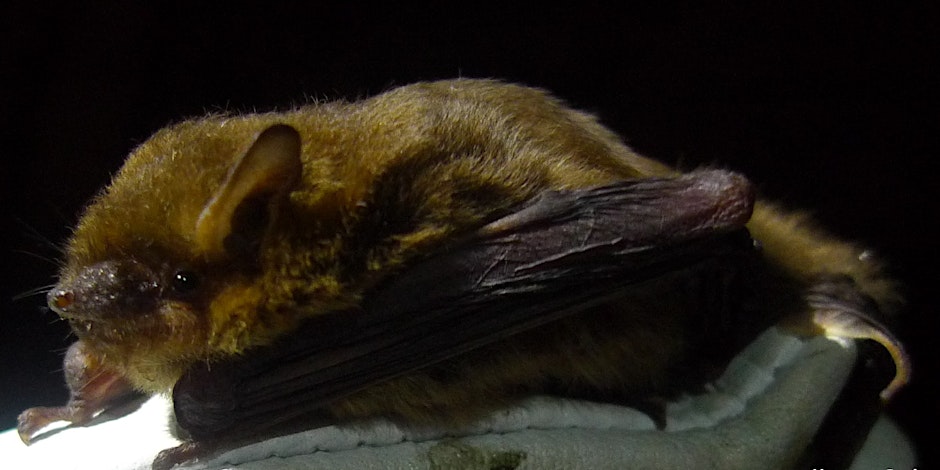
As the nights grow cooler, bats disperse from their summer maternity roosts and seek unheated buildings or the shelter of trees where they can pass the winter in less crowded conditions.
If you used a bat detector in summer, when activity outside the roost was mostly about food, you’d have heard echolocation calls and feeding buzzes. Now in autumn there still are insects on the wing on warmer nights, and the bats will be hunting then. But by September we’ve begun to hear the social calls associated with mating.
Male pipistrelles perform song flights in August and September. They congregate above a tree or fly along a particular route, emitting the species-specific social call, which you might use to distinguish common from soprano pipistrelles. In general, social song has a deeper frequency than echolocation calls and gives a different sonogram.
When I was using a bat detector regularly, I would pick up songs on September nights from the air-space above a tall pine. This seemed similar to a lek. But mating takes place elsewhere, within roosts such as bat boxes, where individual males can be found with several females. This suggests that males collect followers while singing in flight.
Bat loggers used in September reveal social calling within roosts of brown long-eared bats.
September is the time of a peak in our population of Nathusius’s pipistrelle, the numbers being boosted by migrants coming in over the coast from the North Sea. Nathusius activity in Aberdeen has been especially high in September this year, on a static recorder in Cults, and individuals have been found on a boat and oil rig offshore.
Roe deer Capreolus capreolus
Roe deer are choosy feeders who select the most nutritious foods, such as herbaceous plants, flowers, buds and young leaves. In early autumn, they can add tree masts and various fruits as they build up their energy reserves. After the stress of the summer rut, the bucks are in poor body condition, while the does have been rearing their young and must now feed themselves up.
Young roe have white-spotted coats when they’re born, but by September, these spots are gone. The youngsters now look more or less adult but a little smaller. They will stay in the company of their mothers for months yet, but are now weaned and are feeding themselves on forbs and browse.
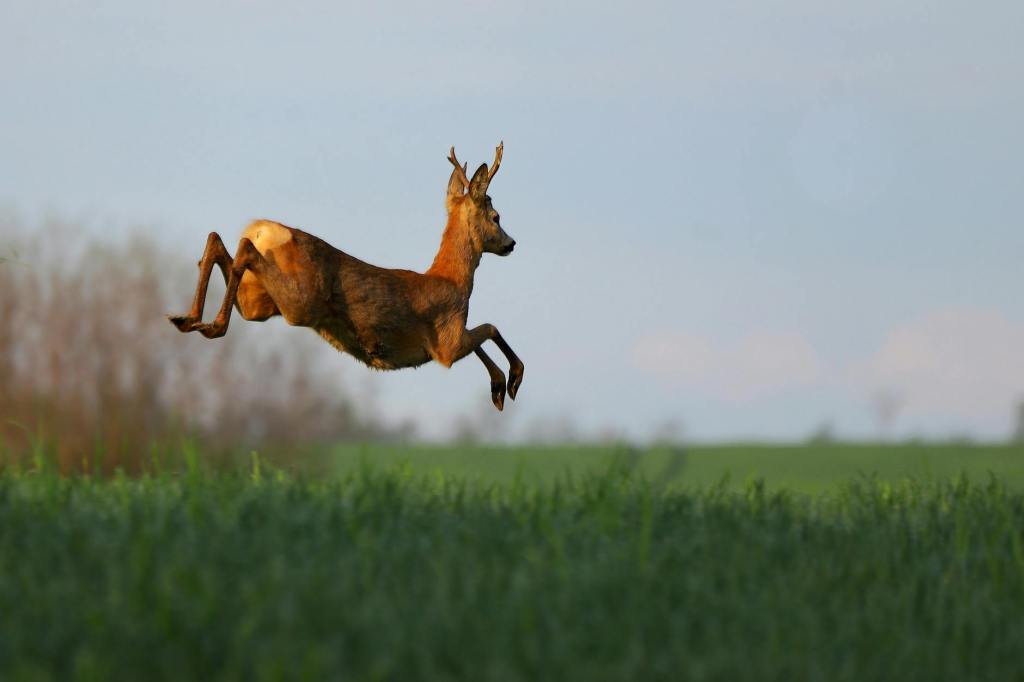
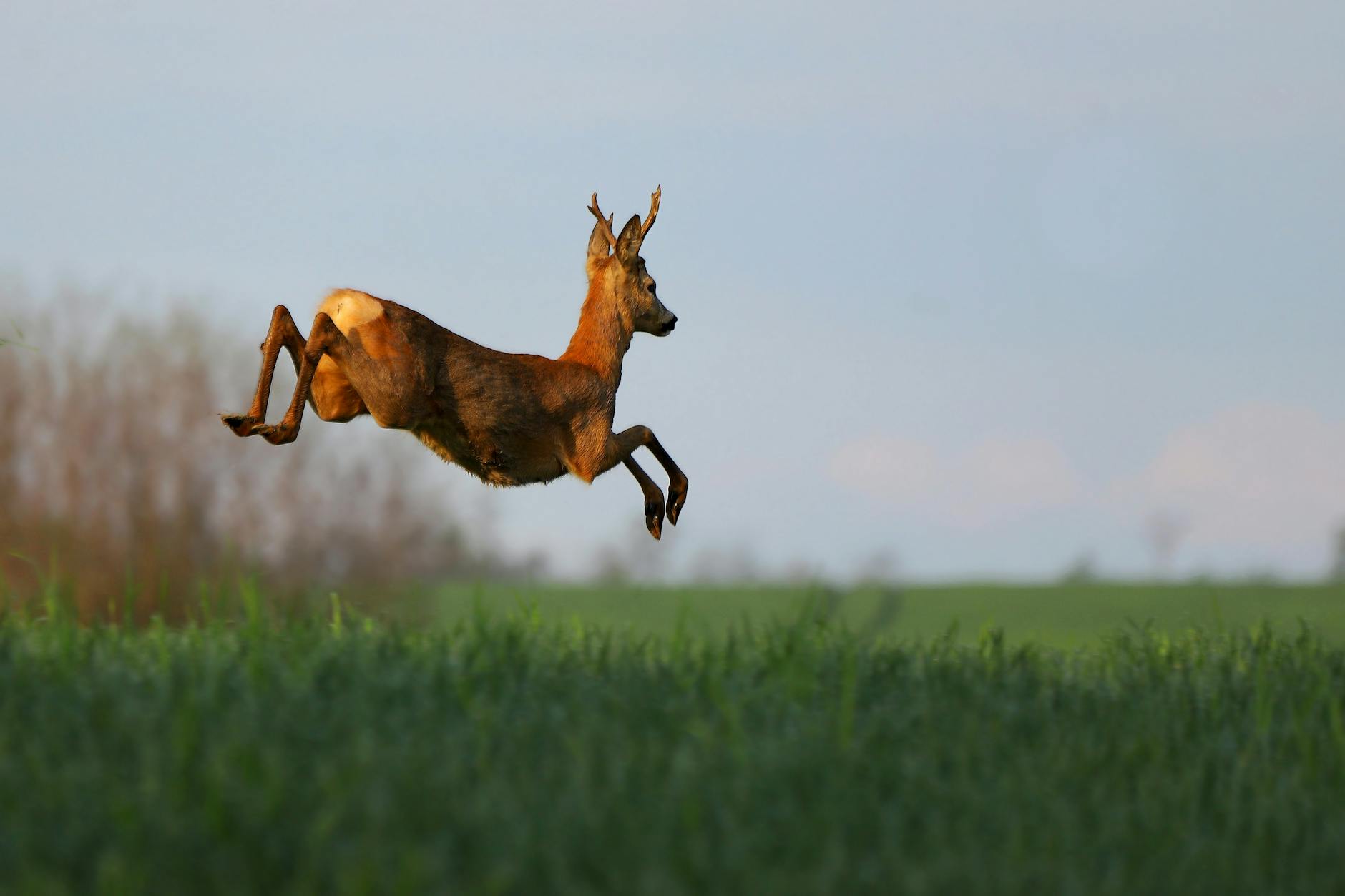
The local roe deer still have their red summer coats (seen 7 September). The adult bucks haven’t yet shed their antlers, which will be lost in early winter. Yearling bucks’ antlers are little spikes that may not be conspicuous from a distance.
Foxes vulpes vulpes
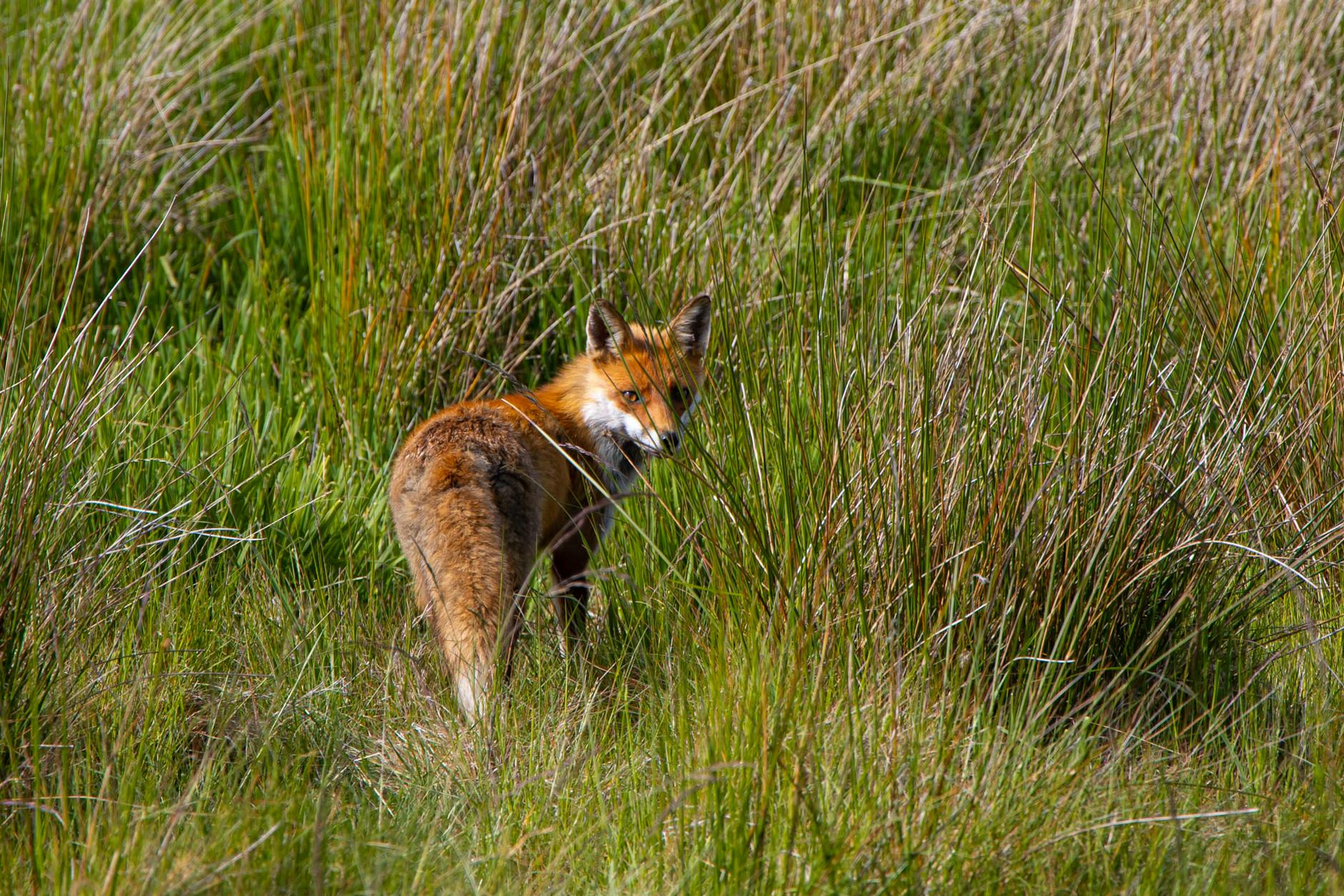
September seems a good time to be a fox. Food is plentiful and foxes eat almost anything. Mice and voles have been breeding all summer, their numbers are high, and the young ones are still quite naive. Foxes also eat whatever fruit is in season. Locally, at this time of year, brambles, rose hips, and hawthorn berries are ripe.
On the other hand, when the ground is dry, earthworms can’t be had. But beetles are numerous while the ground surface remains warm. In late August and early September, wasps’ nests are active and can be dug out of the ground or from rotten stumps. Both badgers and foxes will do this in dry seasons when they can’t get earthworms.
The approaching winter will be hard on foxes, especially since they carry a large parasite burden which depresses their body condition. So now is the time to fatten up. However, intestinal parasites also respond to rich feeding. So the fox must take in enough nutrition to keep ahead of them.
In September the young foxes gradually disperse and seek territories of their own. As they compete with one another, and with settled adults, there will be some fighting and general aggression. Familial contact calls are heard less and territorial barking increases.
Fox fur grows thicker before winter; by now this year’s cubs have lost their baby plush and grown adult coats. As autumn progresses, the fox’s brush thickens, and in winter the brush will help the fox keep its nose warm.
Pine martens Martes martes

Pine martens are becoming more common in our area, and in spring and summer when they have families they become very conspicuous. Both adults and young seem bold and unworried by meetings with humans. This casual attitude becomes less noticeable in September, but not much.
The young martens who were born in spring are still growing. They’re not much smaller than the adults now, so if you see one on its own you might not spot that it’s a youngster unless you can see its tail. The tails of adults look more bushy and subtly longer, presumably because of longer fur. The adult marten’s head, too, has a look of maturity that’s hard to describe but easily seen.
The young martens are still very playful. The spring family, a mother and two or three kits, has stayed together through the summer. Now they’ve started to drift apart. But when the animals meet they will roll and tumble together.
Pine martens are among the predators that cache food, especially if it’s large prey, which for them would mean a bird, a small mammal, or an egg. They will do this as winter approaches, although they store surplus food at other times. Meanwhile September brings them abundant bramble and blaeberries, and judging from scats, they eat as much fruit as they can find.
Red squirrels Sciurus vulgaris
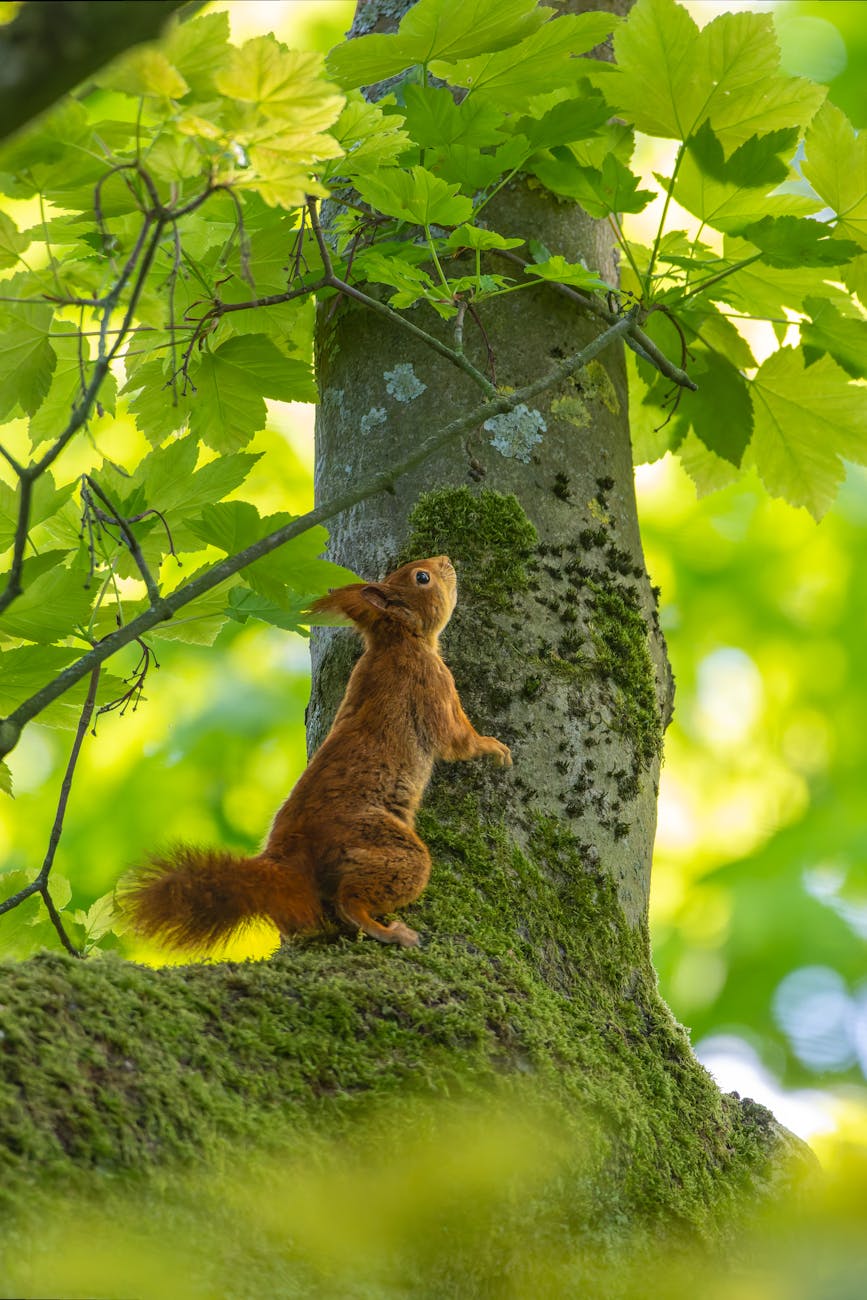
For squirrels, September is a crucial time for foraging and caching the nuts and seeds that they’ll need in winter. They store food at ground level, digging shallowly and scraping the leaf litter back over the cache. A lot of it goes missing, one individual pinching another’s cache, and probably other animals such as mice will find the food and take it to cache for themselves. This makes it essential for the squirrel to make many caches so that some, at least, will still be there when food becomes scarce later.
It’s often said that squirrels forget where they hid their food. So forgotten acorns grow into oaks, for instance. This theory doesn’t consider the high mortality of small mammals. They can’t all come back for their acorn; why assume that they just forget? But it is true that, in September, tree seeds make up the greatest part of the diet. Fungi are another September food, and these may be stored in a tree if not eaten at once.
Squirrels give birth in early spring, and again in high summer. The young from summer litters have become independent by September and will soon be dispersing.
Winter coats are grown from August into September. The ear tufts become prominent, and the tail bushes up, while the body fur grows longer and may look a darker red or brown.
The nests used by squirrels vary through the year. Squirrels are active all year and survive the winter by maintaining a weatherproof home. Squirrel nests, called dreys, are built in trees, and are roofed over so as to form a large ball-like structure. Summer-built ones are comparatively light, but the drey built for winter has a soft, thick lining and walls at least 5cm thick. Alternatively, squirrels make a den within a tree cavity. Here, too, a warm lining of soft moss and other shreddable stuff will be needed. September is a good time for gathering dry moss, grass and leaves.
Badgers Meles meles
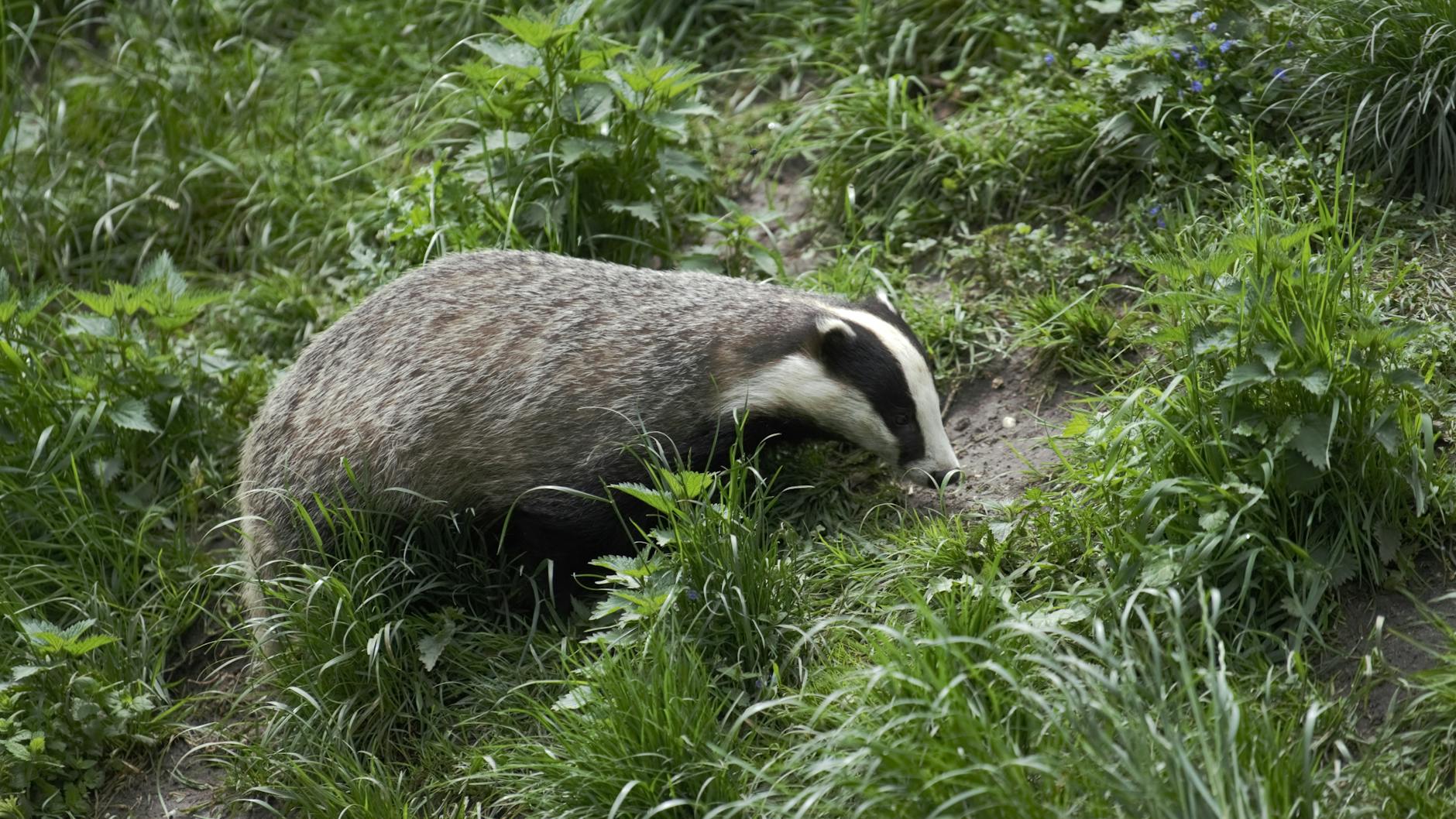
Like other omnivores, badgers spend late summer and autumn feeding up on a harvest of fruit and prey. Though they eat many things, they are earthworm specialists. In a dry summer and autumn, however, earthworms are aestivating, and when dug up they’re pale and thin. Luckily there are wasps’ nests still to be had; underground nests of bumblebees are mostly finished, but some colonies remain. Badgers can also exploit any unharvested corn crops.
During September the badgers’ food intake is rising to its peak in October. Food intake is expected to drop off again in winter, because the animals are not very active in cold weather. They are said to hibernate or at most to be minimally active. But, at 57 degrees N, at least in current conditions, the badgers are active all winter and seem to eat whatever they find.
Rather than merely getting as fat as they can, badgers in autumn build up to a target weight. This seems to be related to a complex reproductive cycle in which their body condition presumably plays a part.
The adult female badgers may ovulate at any time of year, coming into oestrus on a 28-day cycle. But research has revealed two peaks of ovulation, one in spring, and one in September. Mating gives rise to a zygote that gets as far as the blastocyst stage. This will be implanted in December, no matter how long it’s had to wait since fertilisation. Some of these blastocysts are lost, and perhaps replaced, until, by September, the number of fertilised females is at its highest.
By September the growing cubs are nearly as big as adults, and when seen at camera traps, they are hard to distinguish from their elders.
Annie Lamb
Annie is a zoologist and wildlife recorder. She has run a camera trap in the region for the past ten year.
 North East Scotland Mammal Network