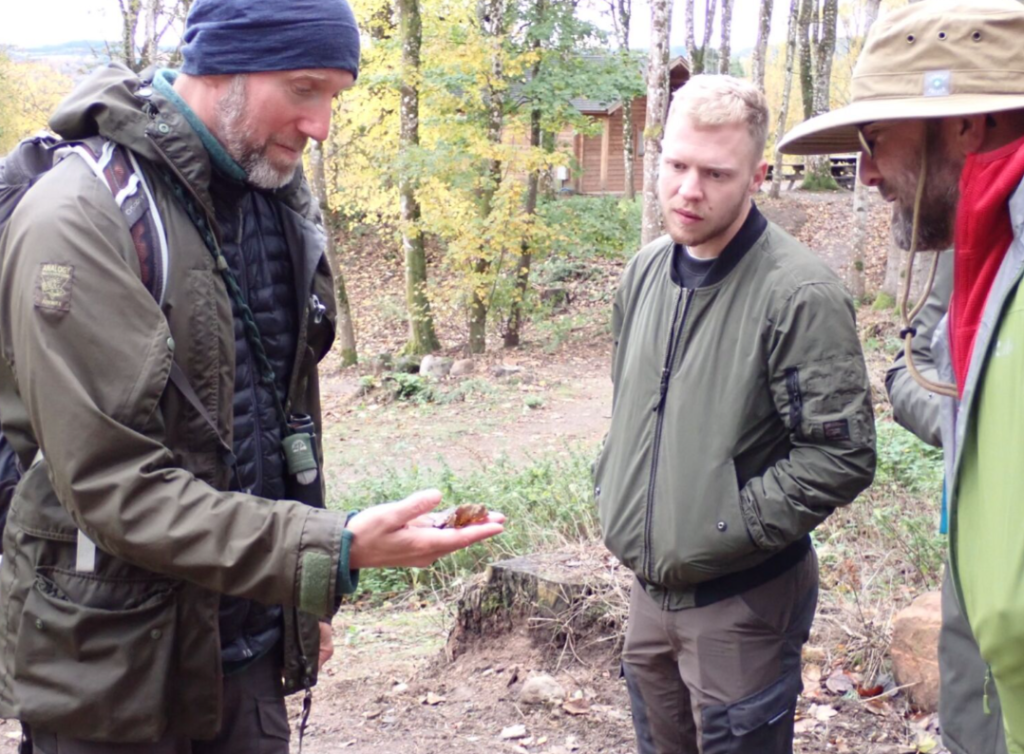
Nine members of the North East Scotland Mammal Network met at Crathes Castle on Saturday 1st November to enjoy a day of learning about mammal tracks and signs with Dan Puplett Nature Awareness.
After getting to know each other a bit over tea and biscuits we spent about an hour in the Nature Room that had been kindly provided by the NTS Ranger Service looking at mammal tracks and signs of mammal activity. It was great to see some familiar faces, including some current and ex students from SRUC! We covered about a huge range of topics. This included everything from the history or tracking to mammal prints and their strides and what this can tell you about how fast an animal is moving. Kill sites and what the damage to bird feathers can tell you about the predator involved. We also spent time talking about animal poo, foraging habits and diet and even bird language and how to interpret it! A lot to cover in a short space of time.
After this session it was time to head outside to see what we could find – and sure enough it began to rain. Soon we were all kitted up in waterproofs and armed with Dan’s excellent tracks guide and lunch we headed out into the grounds to see what we could find.
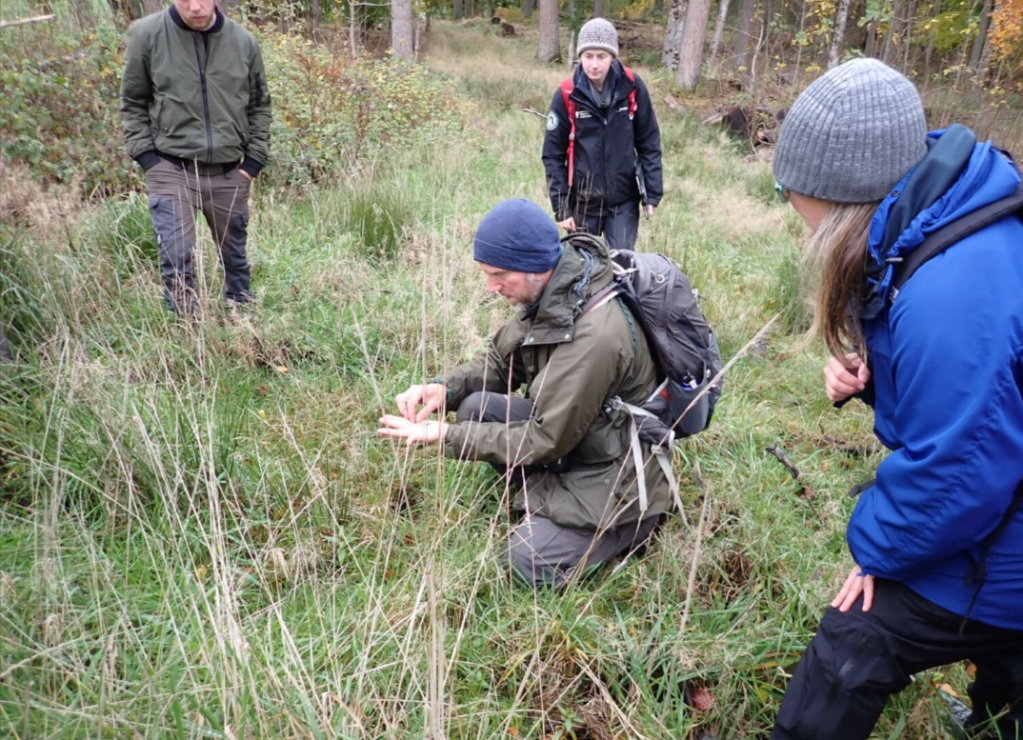
Whilst outside we found Vole runs and their latrines, looked at feeding signs on fungi – although this was mostly from birds and slugs. We also found signs of antler rubbing by deer and Dan covered how to begin to narrow down which species may be doing it. This illustrated a key theme from Dan about building up a body of evidence to lead you to a conclusion. In the case of the deer rubbing, the height of the rubs, the location and some idea about deer species in the area helped us deduce it was likely from a roe deer. We found wood pigeon kill sites and looked at how the removal of the feathers and location of the carcass can help deduce the predator type. Mammals and birds have different ways of removing the feathers. We then found deer resting places, looking at the marks in them, how the deer make the marks and what this can tell you about the species of deer using the resting place. Immediately before lunch we discovered what appeared to be a red squirrel dropping – a really rare and exciting find.
Poo was a topic after lunch, with Dan taking us through a deduction exercise to arrive at a decision as to the likely animal. One test was to smell the scat, which reminded me of the fish hall in Coventry indoor market (an oddly specific memory!). Having gone through the exercise we arrived at the conclusion that it was most likely from a pine marten. We then spent time looking at the differences in tunnels made by badger and fox and looking at animal prints in mud around the estate. We recorded all the finds in the Mammal Mapper app as we went. Several hours passed in what felt like moments before we returned to the nature Room to look at skulls, jaw bones and teeth, not just to identify the animal but also to consider things like age, before a final wrap up of the day and more biscuits.
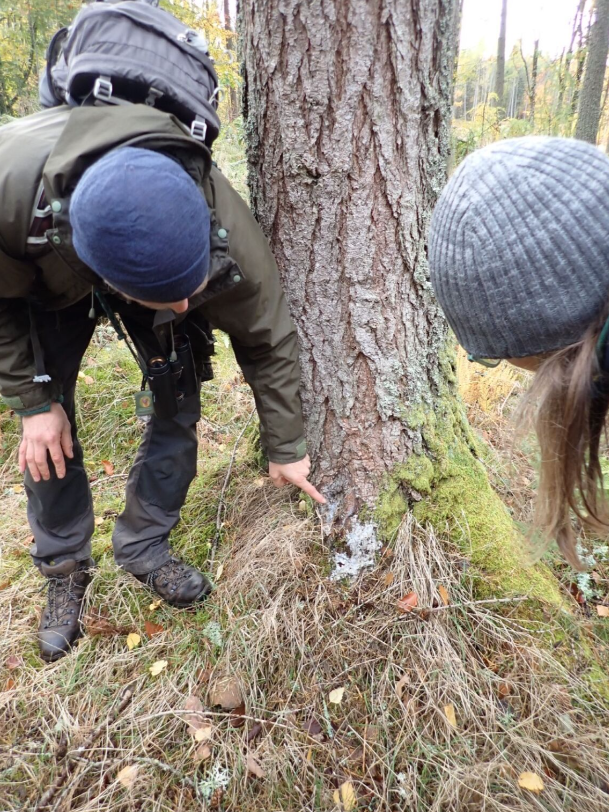
It was an amazing, fun and information packed day. The things we looked at will make not only identifying mammals easier, but also makes the whole experience of being outdoors richer and more fulfilling. A massive thank you to Dan for so enthusiastically sharing his knowledge and expertise on tracking and to Lynee and the NTS rangers for accompanying us and allowing us to use the Nature Room.
Mike Raby
Mike is the Sustainability Officer for SRUC and serves on the committee of the North East Scotland Mammal Network.
 North East Scotland Mammal Network