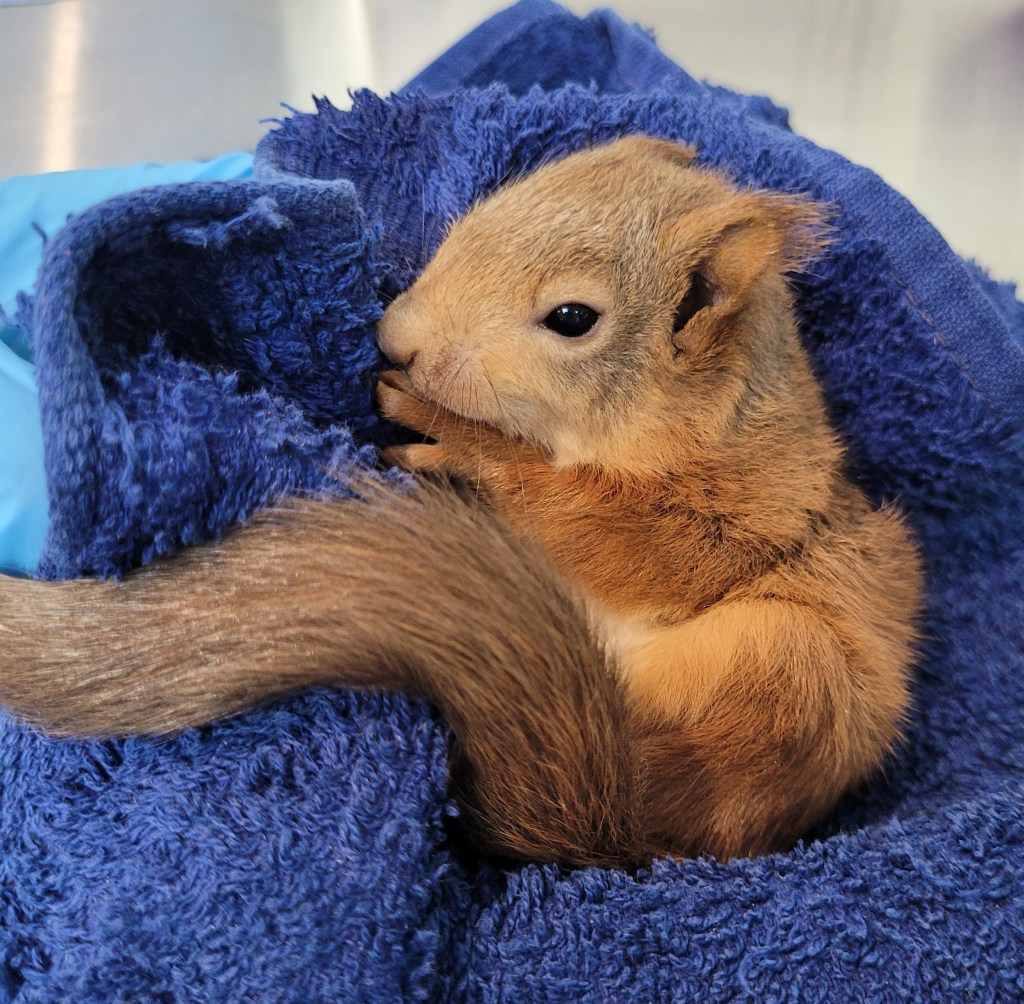
If you find an injured or apparently orphaned wild animal, your first instinct may be to intervene immediately. While this response is entirely understandable, acting without advice can sometimes do more harm than good. The most important first step is to pause, assess the situation from a safe distance, and contact a wildlife rescue centre for guidance before handling or moving the animal. In Aberdeenshire, this should always be New Arc Wildlife Rescue, who can be reached on 01358 701723. Many young animals that appear abandoned are in fact being cared for by a parent nearby, and unnecessary intervention can unintentionally separate them from that care.
If advice is given to contain a small animal such as a hedgehog, bird, or other small mammal, keeping the animal calm and secure is critical. Use gloves or basic personal protective equipment to protect both yourself and the animal, as wildlife can carry diseases and may bite or scratch when stressed. Place the animal in a well-ventilated box lined with a towel or newspaper and keep it somewhere quiet, dark, and warm. Do not offer food or water unless specifically instructed to do so by a wildlife rehabilitator or veterinary professional. Birds in particular can deteriorate very quickly if stressed or fed incorrectly, making prompt professional advice essential.
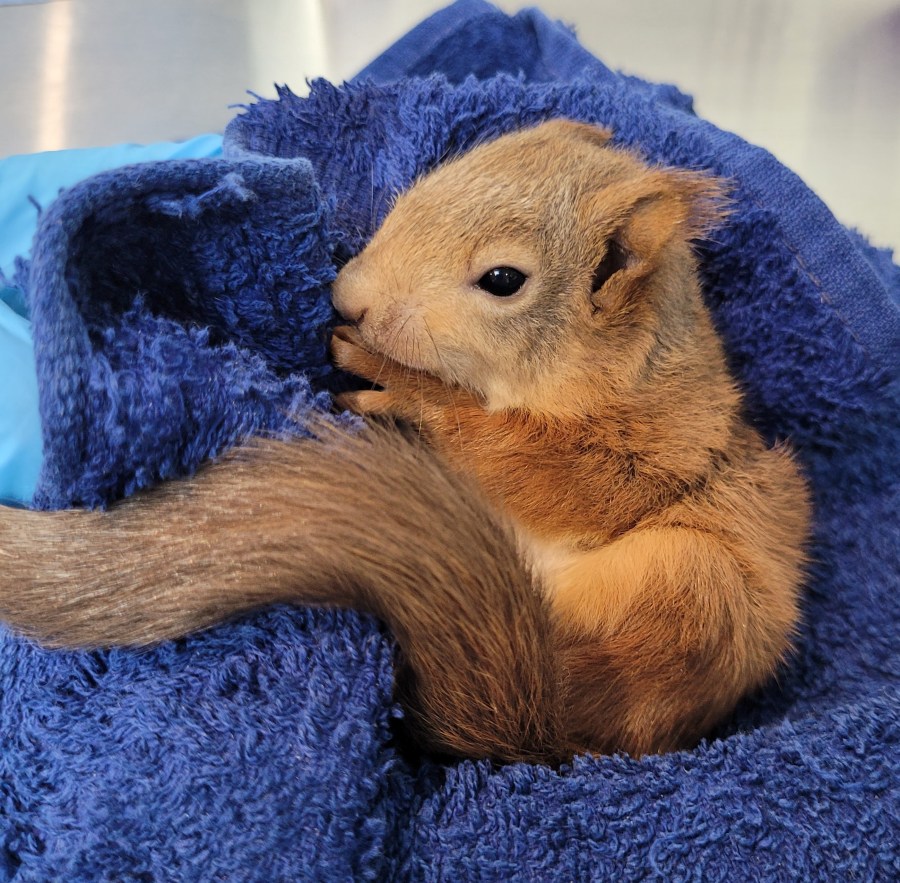
If you encounter an injured deer, or if you collide with a deer while driving, do not attempt to approach or handle the animal. Deer are powerful and unpredictable when injured and can pose a serious risk to human safety. Move to a safe location, use hazard lights if you are on a road, and contact the police if there is an immediate risk to traffic. As soon as it is safe to do so, call New Arc Wildlife Rescue for advice. Be prepared to provide an exact location for the deer, ideally using the what3words app, as this allows responders to locate the animal quickly and accurately.
In all situations, minimising stress is key. Keep noise, handling, and visual stimulation to an absolute minimum, and do not attempt home care, rehabilitation, or “nursing” without professional guidance from a wildlife rescue centre. Wildlife rescue centres are best placed to advise whether an animal truly needs intervention and what the most appropriate next steps are. By contacting New Arc Wildlife Rescue first and following their advice, you give injured or vulnerable wildlife the best possible chance of receiving appropriate care and achieving the best possible outcome.
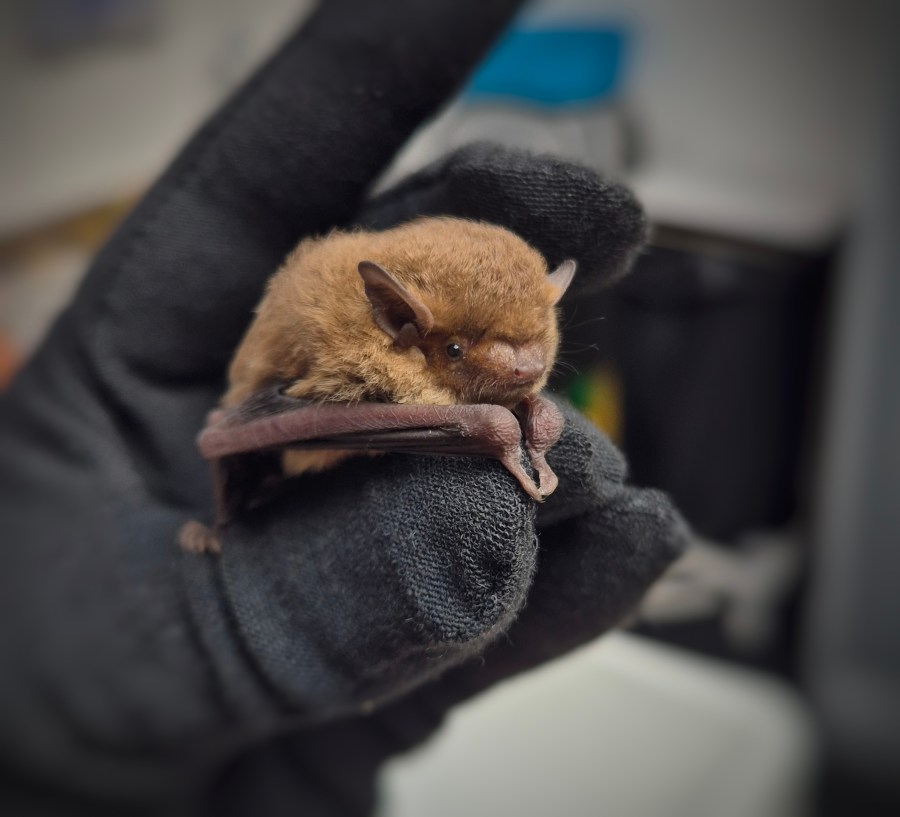
If you would like to support the work of New Arc Wildlife Rescue, there are several meaningful ways you can help. Regular monthly donations provide vital, reliable funding and can be set up via JustGiving at https://www.justgiving.com/charity/newarc. You can also make a direct practical difference by purchasing much-needed items from our Amazon wish list: https://www.amazon.co.uk/hz/wishlist/ls/33K67RTHLD8I7?ref_=wl_share. In addition, we are always looking for volunteers, including drivers who can collect contained wildlife casualties from their local area and transport them safely to our centre, volunteers to assist with a regular weekly shift at our wildlife rescue centre, and volunteers to support our charity shops in Ellon and Dyce. Every donation of time, resources, or funding helps us continue providing essential care to wildlife across the region.
By Paul Reynolds, New Arc Wildlife Rescue
 North East Scotland Mammal Network