When we took on the volunteer convenor role for the Scottish Wildlife Trust reserve at Red Moss of Netherley, in 2010, the site’s mammal list stood at three species; Fox, Badger and Roe Deer. Over the following 16 years, through a range of direct observation, camera trapping and bioacoustics, the list has grown to a heady 26 species. How much further can we go? Well, there’s still one or two species that are possible, but it might take another 16 years to find them.
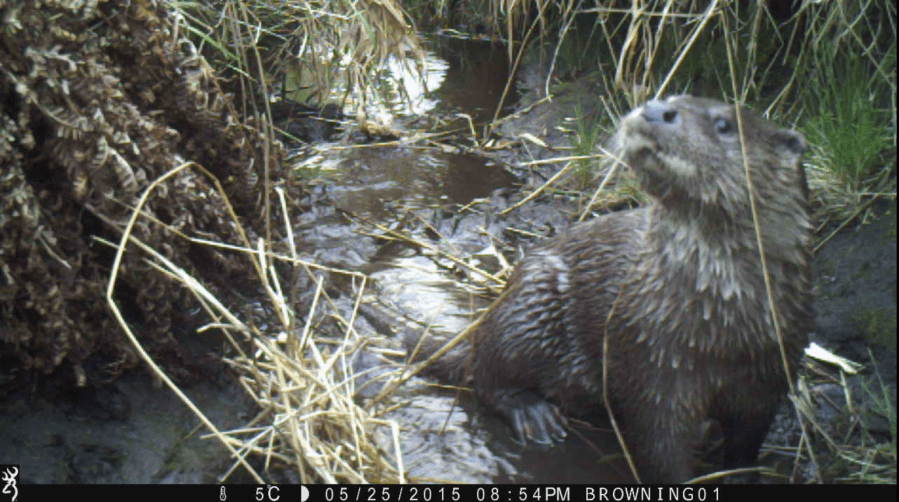
This rise in the species total has very much tracked our own interest in mammal recording. Our first camera trapping experience, in 2011, entailed using a camera borrowed from a work colleague and soon we were hooked. Before long, we were really excited to add Pine Marten to the list, at a time when records were still quite scarce in east Aberdeenshire (how times have changed). Soon, we had camera traps of our own, and placement along a ditch added our first evidence of Otter on the reserve.
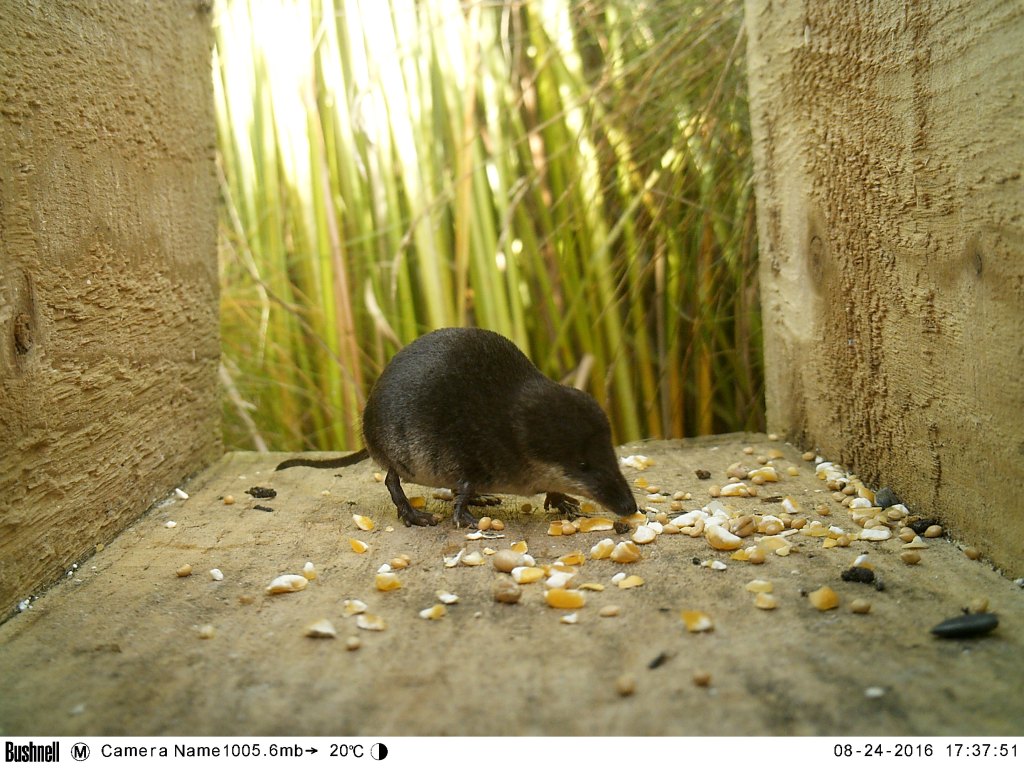
What really accelerated our recording was developing the small mammal camera trapping technique from 2013 onward – initially improvised with some drainpipe, and recording gazillions of Wood Mice, then a wooden box with Perspex lid, which revealed the expected Bank Voles in scrubby areas around the edge of the moss and Field Voles along the grassy entrance path. Adding mealworms to the bait encouraged visits from shrews and we grappled with separating Common Shrews from Pygmy Shrews, before realising that both were pretty much equally common. Most excitingly, placing boxes alongside ditches proved successful for finding Water Shrews, a seldom recorded though seemingly widely distributed species in our region. Continued use of the boxes eventually added Brown Rat (they all count) and Weasel in 2015, no doubt attracted by the mousey smells.
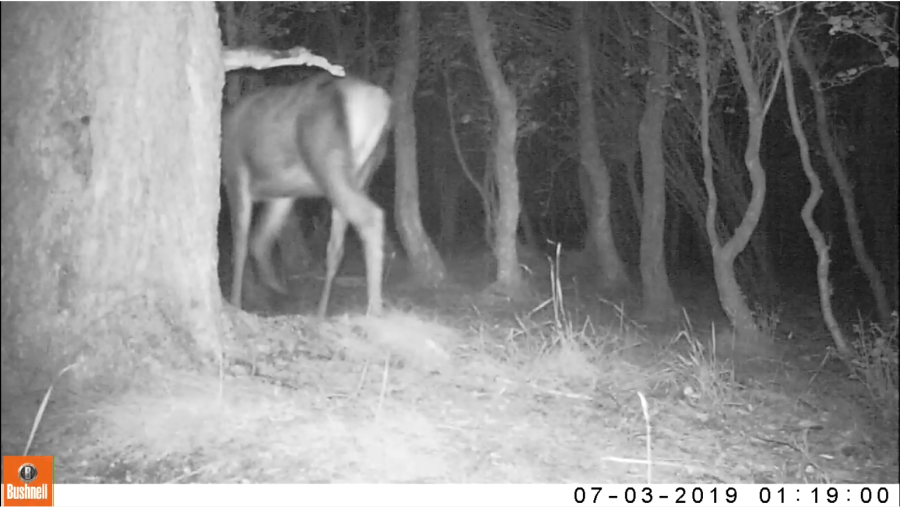
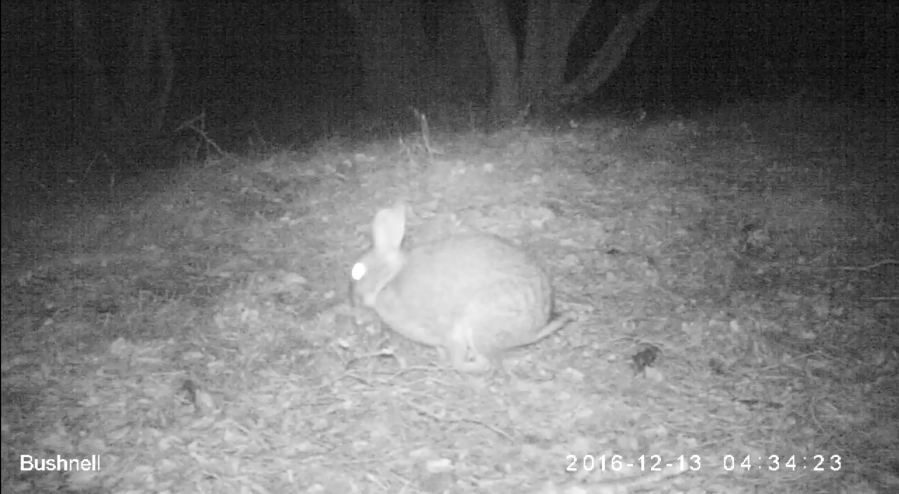
We continued using camera traps dotted around the woodland fringes of the reserve and, in 2016, obtained our only ever Rabbit record actually on the reserve, with a single video clip. In 2019, over the course of a week, a single Red Deer walked past a camera trap three times – this was certainly unexpected, though the reserve lies just a couple miles from the closest point of Durris Forest, in which Red Deer do occur. In 2021, Brown Hares started to appear at another camera location, with periodic appearances at that same point up to the present day. This same camera captured what we are counting as a Feral Cat (but who really knows?) that appeared once in 2024. An American Mink that appeared a few times over a couple of weeks in summer 2020 on a camera trap set on a burn along the boundary of the reserve was an unwelcome visitor. Thankfully, this is our only record.
In recent years, we have also started to use bioacoustics for wildlife recording. We recorded Common Pipistrelle, Soprano Pipistrelle and Daubenton’s Bats in 2016, on an Anabat automated recorder borrowed from North East Scotland Bat Group (NESBats). However, having our own Audiomoth acoustic recorders has enabled monitoring across more locations and over longer periods. In 2020, this added Brown Long-eared Bat, which proved to be quite easy to find around the wooded edges of the reserve, and also the occasional Natterer’s Bat.
It is not all remote recording – we see the original three species, Roe Deer, Fox and Badger, with varying degrees of frequency. Presence of Moles is evidenced by the earth mounds that appear each year along the grassy approach to the moss and this same area produced our only Hedgehog record, with remains of a dead one in 2012.
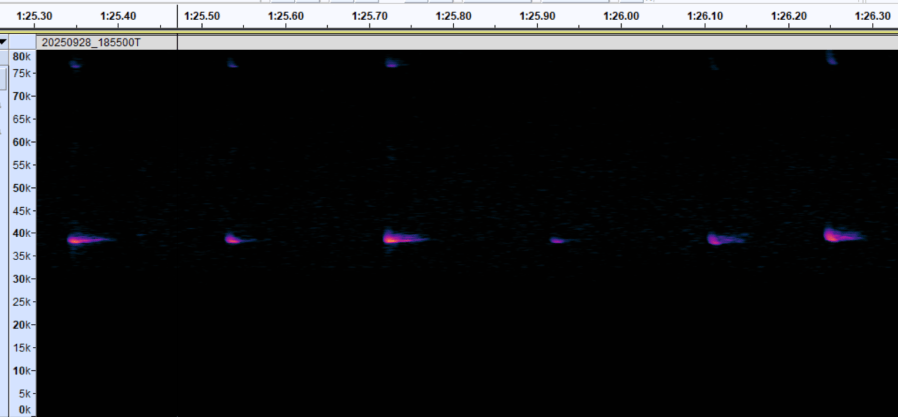
Our most recent addition was very deliberately targeted. September 2025 saw a substantial influx of the migratory Nathusius’ Pipistrelle into North-East Scotland (and beyond) and timely deployment of an Audiomoth succeeded in capturing a few recordings on one evening.
So what else might we expect? Perhaps the most surprising omission is that we have no records of any squirrels. It is less surprising that we have no Stoat records, given the scarcity of Rabbits, though we have seen one on the roadside close to the reserve boundary, so it is certainly possible. Water Vole has been reported not too far away but would be a great achievement to find on the reserve. If we are ever to reach 30 species, we need a real outsider. But one thing is for certain – we’ll keep on looking.
Nick Littlewood & Rose Toney
 North East Scotland Mammal Network